
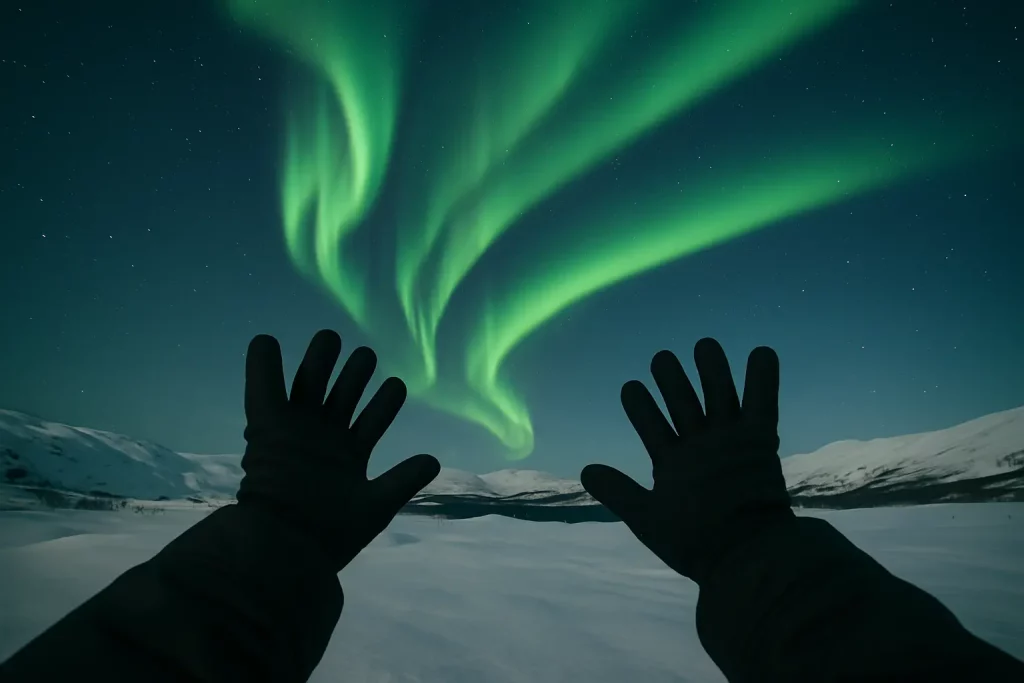
I’m Kayla. I chase the sky. I’ve stood by frozen lakes. I’ve sat in a rental car at 1 a.m. with snacks and sore toes. I’ve cheered and I’ve cried a little. So when do you actually see the northern lights? Here’s what worked for me—and what didn’t.
So…when’s “best”?
Short answer: late September through late March in the far north. Long answer: it depends on darkness, clouds, and the Sun.
Curious about how I pin down that sweet spot month by month? I laid out my full calendar-based strategy in this expanded guide on 5 Star Share—[The Best Time to See the Northern Lights (From My Cold, Happy Hands)](https://www.5starshare.com/the-best-time-to-see-the-northern-lights-from-my-cold, Happy Hands).
- In Alaska (Fairbanks): My best run was March 6–9, 2023. The nights were cold, clear, and long. I saw a strong show around 11:30 p.m. to 1:30 a.m. It started as a gray smear, then it snapped to green and purple bands. I yelled. I truly did.
- In Iceland (near Vík): November 18, 2022, was a win at 12:10 a.m. The moon was a slim crescent. The sky felt dry and crisp. The lights rippled low in the north at first, then climbed overhead.
- In Norway (Tromsø): January 24, 2020, I almost missed them. Cloud deck was stubborn. A gap opened at 1 a.m., like a curtain. Ten minutes of bright pillars, then poof—gone. That’s the dance. If you’re plotting a Norway trip, cross-check the best time and place to see the Northern Lights guide from Hurtigruten; it lines up well with my experience.
You know what? I even saw them way farther south. On May 10, 2024, a big storm lit up the sky over Wisconsin. Pink and green all the way to the horizon at 10:45 p.m. That night was wild. So it can happen out of season during strong solar storms. Rare, but real.
Time of night that keeps paying off
I see the most action between 10 p.m. and 2 a.m. local time. Midnight feels lucky. But I’ve caught faint arcs at 8:30 p.m. in March and bright blasts at 3 a.m. in January. I set alarms by the hour and do warm-up laps to the door. My rule: don’t give up after the first look. The sky changes fast.
Moon, clouds, and that pesky street light
- Moon: Darker is better. New moon week is sweet. A half moon can still work if the aurora is strong, but it washes out color. I plan trips around the moon like a weirdo, and it helps.
- Clouds: Thin haze? Maybe. Thick clouds? Almost never. In Abisko, Sweden, on January 12, 2019, clouds ate the whole night. I learned to chase gaps. I’ve driven 30 minutes just to clear a hill and found a window.
- Light pollution: Turn your back to town. A north-facing shore or a dark field helps. In Fairbanks, I drove 20 minutes out. Worth it. The greens popped.
The nerdy checks I actually use (kept simple)
I’m not an engineer. I just check a few numbers:
- KP index: 4 or higher raises my hopes (I track it with the KP Index Aurora Forecast App). 5 feels spicy.
- Bz (solar wind direction): If it points south (shows as negative), that’s good. I look for -5 nT or lower.
- Cloud maps: “Clear Outside” and “Windy” help me hunt breaks.
- Aurora apps I like: “My Aurora Forecast” and “SpaceWeatherLive.” I set alerts, then try to nap.
Back in college, my dorm hallway relied on a frantic group chat whenever the KP spiked; if you want a campus-wide channel that’s built for exactly that kind of real-time rally, check out InstantChat College—it lets you spin up private rooms in seconds and ping every roommate the moment the sky turns electric.
I also skim the 5 Star Share aurora roundup each evening; their color-coded map tells me at a glance whether it’s worth zipping up my parka or zipping into my sleeping bag.
If that sounds like alphabet soup, don’t stress. Think: big KP + clear sky + dark night = go outside.
What went wrong (so you don’t repeat my oops)
- I booked Iceland in late June once. Guess what I saw? Midnight sun. No darkness, no show. Pretty sunsets though.
- I ignored the full moon in Tromsø, 2018. The lights were there, but the sky looked washed. I still smiled, but I wished for a darker week.
- I quit early in Finland one night because I was cold. Lights exploded 20 minutes after I went to bed. My friend sent me a photo. I felt like a sad burrito.
What I wear and bring when it’s real cold
Layer like you mean it. I use wool base layers, a puffy jacket, and windproof pants. Hand warmers in gloves and boots. A thermos of hot chocolate because it tastes like a hug. And a small foam pad to sit on—snow is sneaky cold.
My phone dies fast in the cold. I keep a battery pack in an inside pocket. Cables get stiff; I tuck them close to my body.
Photo settings that saved my shots
I’m not a pro, but these worked:
- Camera: Wide lens at f/1.8–f/2.8
- ISO: 1600–3200
- Shutter: 5–15 seconds (faster if the lights move fast)
- Focus: Manual, set to infinity (then back a hair)
- White balance: 3500–4000K
- Tripod: Yes. Your knees aren’t a tripod. I’ve tried.
Phone tips: Use Night mode. Set a 3-second timer to stop shake. Lean the phone on a rock or a backpack if you forgot a tripod. I’ve done that plenty.
Place-by-place notes from my own nights
- Fairbanks, Alaska (March): Clear, cold, very steady. 11 p.m.–2 a.m. was gold. Roads were fine with winter tires. I liked Murphy Dome and a random pullout on Old Murphy Dome Road.
- Iceland south coast (November): Windy but thrilling. Watch for fast clouds off the sea. I saw the best color inland by a quiet farm road.
- Tromsø, Norway (January): Plan for cloud dodging. Tours help if you don’t want to drive. I still drove, because I like control and snacks.
- Wisconsin (May 2024 storm): Sunset glow faded, then pink rays shot up. People cheered in a grocery store parking lot. Strange? Yes. Magic? Also yes. If you ever swing through rural Westfield in central Wisconsin for a storm like that, skim the local listings at this Westfield community board to score a driveway, back-forty field, or even a spare sleeping porch with low light pollution—handy when every hotel between Madison and Wausau is suddenly booked by fellow aurora chasers.
Quick cheat sheet (pin this in your brain)
- Best months up north: Late Sep–Mar
- Best hours: 10 p.m.–2 a.m. (check hourly)
- Best sky: Dark, clear, away from town
- Watch: KP 4+, Bz south, low clouds
- Avoid: Full moon weeks, thick cloud, city lights
- Be ready: Layers, tripod, spare battery, patience
A small real-world truth
I love late nights, but I also hate them. Sounds odd, right? The waiting can feel long. Your toes get numb. But when the sky starts to move—when green lifts like smoke and purple bows in—time flips. You warm up. You laugh. You forget you were tired.
So, the best time to see the northern lights? Aim for dark months, clear nights, and the deep middle of night. Check a few simple numbers. Then go outside and let the sky try its thing. Sometimes it fizzles. Sometimes it sings. And when it sings, you’ll feel it in your ribs. I did. I still do.